
Iran-South Korea relations; a bridge that stands firm even in toughest days’
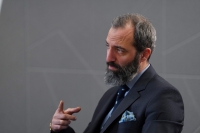
TEHRAN- Iran and South Korea have maintained economic and diplomatic ties for decades, navigating sanctions, geopolitical shifts, and regional turbulence. In an interview with Tehran Times, Pooya Firoozi, First Vice Chairman of the Iran-South Korea Chamber of Commerce, discusses how the joint chamber is working to preserve this vital bridge during the current circumstances—not by waiting for conditions to improve, but by actively preparing Iran for the future opportunities. From transferring South Korea's development know-how and publishing specialized reports to identifying new industrial capacities and fostering provincial partnerships, Firoozi outlines a forward-looking strategy that goes beyond humanitarian projects and aims to transform a fragile connection into a lasting corridor for trade, technology, investment, and human collaboration.
In this interview, while referring to the decades-long history of economic relations between the two countries, Firoozi emphasized that the joint chamber has not merely sufficed with efforts to maintain economic ties in the current difficult circumstances. Rather, by transferring South Korea's development experience, preparing specialized reports, identifying new operational capacities that can be implemented, and maintaining communication with government bodies, chambers of commerce, trade associations, and economic actors of both countries, it is preparing itself for a new phase in Iran-South Korea relations.
He believes that relations between the two countries should not be analyzed superficially or intermittently, and the joint chamber strives to preserve the "communication bridge" between the economic sectors of Iran and South Korea even in the most challenging conditions.
• Despite international sanctions, South Korea has continued its engagement with Iran through humanitarian and development projects, including establishing a vocational training center in Kurdistan, the "Kahak" rural wastewater project in Sistan-Baluchestan, and a school equipped with solar panels in Tehran. How can these projects be used to reopen broader trade routes?
These projects should not be regarded merely as humanitarian actions; rather, they are part of the capital of accumulated trust and history of cooperation between the two nations. In a situation where economic relations have been affected by sanctions and international restrictions, these very collaborations have helped maintain the connection between Iran and South Korea in human, educational, technical, environmental, and clean energy fields.
The Iran-South Korea Joint Chamber is also prepared to transform these experiences, which you mentioned, from the level of limited projects into broader economic cooperation at the appropriate time.
For instance, the vocational training center in Kurdistan can pave the way for broader cooperation in industrial skills training, technical knowledge transfer, and human resource development. The "Kahak" rural wastewater project can be serve as a basis for broader development projects involving cooperation between Iranian and Korean companies in the fields of water, wastewater, and the environment. Moreover, the experience of equipping a school in Tehran with solar panels can serve as a model for nationwide and larger renewable energy projects, especially in public sectors such as schools and universities across the country.
I believe there is readiness to define a cooperative economic development project for each of these experiences and, at the right time, connect Iranian and Korean companies to expand them.
Therefore, these projects should be viewed as small seeds of cooperation that can, under favorable conditions, grow into major economic projects, technology transfer, and joint ventures
Tehran Could Learn From Seoul’s Plan to Turn Culture Into an Economic Engine
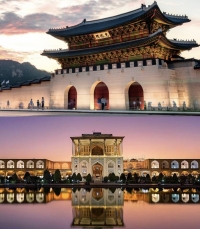
As South Korea unveils an ambitious blueprint to transform its cultural sector into a primary economic driver, policymakers in Iran may find valuable lessons in their Asian counterpart's strategy.
In a recent policy briefing to President Lee Jae Myung, South Korea's Ministry of Culture, Sports, and Tourism outlined plans to attract 40 million annual foreign visitors, up from 23 million expected this year. The vision, framed as "revitalizing regions and expanding into the world with K-culture, sports, and tourism," offers compelling parallels for Iran, a nation rich in heritage but struggling to fully capitalize on its cultural assets.
Learning From Korea's Creative Industries Push
South Korea plans to intensively foster content industries including publishing, music, games, and film as future economic pillars. The strategy includes expanding financial support through loans and guarantees, increasing investment in intellectual properties for global markets, and finalizing a "holdback" system requiring waiting periods between theatrical releases and streaming debuts.
For Iran, with its deep cinematic history and literary traditions, the Korean approach offers a template. Tehran could develop similar support mechanisms for domestic film and music industries, using a holdback system to protect local cinemas from international streaming competition, thereby preserving its unique cultural narrative and creative talent.
Building Infrastructure to Welcome the World
To achieve its visitor targets, Seoul is planning significant upgrades to airports, ports, lodging facilities, and visa systems. A major component involves developing regional tourism products beyond the capital, including plans for two large multipurpose domed stadiums.
Iran's historical sites and diverse climates are undeniable tourist draws, yet the sector often struggles with infrastructure gaps and regulatory hurdles. South Korea's focus on easing visa rules and developing regional hubs provides a tangible model. Iran could invest in specialized tourism around historic cities like Isfahan and Shiraz, while upgrading hospitality infrastructure. Modernizing facilities to host international cultural festivals could showcase Iran's non-oil economic potential.
A blueprint for future: Revisiting South Korea’s architectural legacy in Iran
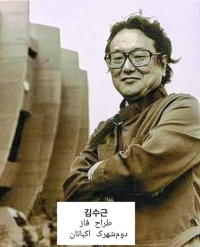
TEHRAN- When we speak of Iran-South Korea relations today, the conversation often centers on trade volumes, petrochemicals, or technology transfers. However, as a recent and insightful report by the Iran-South Korea Joint Chamber of Commerce reminds us, the foundation of this partnership is far deeper and more inspiring than many realize. It is a story not just of commerce, but of shared vision, architectural excellence, and cross-cultural engineering—one that holds valuable lessons for our shared future.
In a detailed review, the Chamber highlights a remarkable yet lesser-known chapter of our history: the involvement of South Korea’s prestigious SPACE Group in the design of Tehran’s iconic Ekbatan Town during the 1970s. At a time when Iran was spearheading some of the most ambitious urban development projects in the region, the SPACE Group—founded by the visionary architect Kim Swoo Geun, one of Asia’s most influential design minds—joined forces with Iranian experts. Under the leadership of Engineer Rahman Golzar at the Tehran Renovation and Development Company, this collaboration brought together Korean modernist philosophy and Iranian urban needs.
The result? Ekbatan Town, which to this day stands as a benchmark of modern residential planning in Iran. Its success was never just about concrete and steel; it was a testament to the power of international expertise meeting local ambition. Kim Swoo Geun, who masterfully blended contemporary forms with traditional Korean aesthetics, later went on to design the main stadium for the 1988 Seoul Olympics—yet his imprint on Tehran's urban fabric remains one of his most enduring international achievements.
Iran, South Korea to Boost Building Industry Cooperation at Tehran International Exhibition
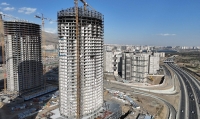
The International Exhibition of Building and Construction, scheduled for August 18–21 at the Tehran Permanent International Fairgrounds, is set to become a key milestone in expanding technological ties between Iran and South Korea, with a special focus on building industrialization and modern construction methods.
According to Mojtaba Mahallati, Deputy for Support and Planning of the Iran Cooperative Chamber, active negotiations are currently underway with South Korean counterparts to enhance technical cooperation. He noted that the presence of South Korean companies at the exhibition could play a significant role in boosting Iran's export capabilities and facilitating broader commercial exchanges between the two nations.
Tehran, Seoul explore closer heritage cooperation
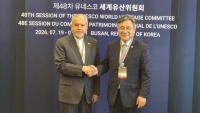
TEHRAN - Iran has proposed establishing a joint task force with South Korea on cultural heritage restoration, conservation and digital documentation following the inscription of Iran's “Alamut Castle and Related Fortifications” on UNESCO's World Heritage List, Iranian officials said during a meeting held on the sidelines of the 48th session of the World Heritage Committee in Busan.
Iranian Minister of Cultural Heritage, Tourism and Handicrafts Seyyed Reza Salehi-Amiri made the proposal during talks with Ho Min, head of the Korea Heritage Service, who welcomed the initiative, IRNA reported on Monday.
The meeting took place after UNESCO's World Heritage Committee on Sunday inscribed the serial property of “Alamut Castle and Related Fortifications” as Iran's 30th tangible cultural property on the World Heritage List.
The newly listed property comprises seven castles and fortifications across the eastern and western Alamut valleys and the southern slopes of the Alborz Mountains in Qazvin province. UNESCO said the sites formed an integrated defensive and administrative system between the 11th and 13th centuries and recognized the property as an example of a fortified mountain landscape reflecting planning, defensive architecture, water management and spatial organization.
Salehi-Amiri said the inscription marked “a historic achievement” for Iran and called it the beginning of a broader responsibility for safeguarding the site.
“At the same time that we are holding this meeting, the people of Iran, especially the people of Qazvin province, are celebrating Alamut's inscription,” he said. “This event will remain in the historical memory of the Iranian nation.”
He said the inscription increased both Iran's and the international community's responsibility to preserve, introduce and pass the site on to future generations.
The minister also referred to damage sustained by 149 historical sites in Iran during what he described as recent attacks by the Israeli regime and the United States, saying Iran needed to benefit from the experience of countries that had restored damaged cultural heritage.
“South Korea, with its valuable experience in restoring cultural heritage, can be an important partner in this path,” Salehi-Amiri said.
UNESCO grants World Heritage status to Iran’s Alamut Castle and Related Fortifications
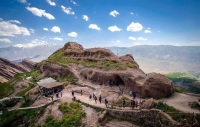
The decision was adopted on Sunday during the 48th session of the UNESCO World Heritage Committee in Busan, South Korea, marking another milestone in Iran’s long-standing presence on the World Heritage list.
The newly inscribed serial property consists of seven historic castles and fortifications spread across the eastern and western Alamut valleys and the southern slopes of the Alborz mountain range in Qazvin province. The property includes Alamut Castle, Lambsar, Navizarshah, Shams-Kelaye, Qostinlar, Shirkuh and Ilan, all of which formed an interconnected defensive and administrative system between the 11th and 13th centuries.
The UN cultural body recognized the property as an exceptional example of a fortified mountain landscape that illustrates sophisticated planning based on a detailed understanding of geography, communication routes, defensive architecture, water-resource management and spatial organization.
From the late 11th century CE, Alamut served as the political, military and intellectual center of the Nizari Ismailistate, an influential Islamic movement whose influence extended across Iran and much of the Islamic world.
Iran’s new ambassador to South Korea, TCCIMA examine solutions to revive Tehran-Seoul trade
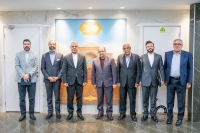
TEHRAN- The new Iranian ambassador to South Korea, before departing for his post, visited the Tehran Chamber of Commerce and held talks with the Secretary-General of the Tehran Chamber to exchange views on the capacities for cooperation with this East Asian country and the development of commercial, technological, and cultural exchanges between the two countries.
In this meeting, the necessity of mutual recognition of capabilities and increasing awareness of the potentials of the two countries with the aim of strengthening trade relations was emphasized.
In the meeting between Ahmad Erfanian, the new Iranian ambassador to South Korea, and Fereydoun Vardinejad, the Secretary-General of the Tehran Chamber, which was held with the presence of the Deputy for International Affairs and Trade Development of the Chamber, as well as representatives from the Iran-South Korea Joint Chamber of Commerce, the regular holding of B2B meetings and specialized webinars, the exchange of economic and technological information, as well as trade delegations and communication with South Korean chambers of commerce were proposed as solutions to strengthen economic and trade interactions between Iran and Korea.
At the beginning of this meeting, Fereydoun Vardinejad, Secretary-General of the Tehran Chamber, referred to South Korea's growth experience over the past few decades and said: In recent years, we have also witnessed this country's influence in cultural, industrial, and political fields compared to other countries. It seems that maintaining cultural identity and brand development are among the issues that the policymakers of this country have emphasized, and they have been largely successful in this area.
The Secretary-General of the Tehran Chamber further spoke about the readiness of Iran's private sector to cooperate with Korean companies and stated: Traders and businessmen of the two countries can learn about each other's economic opportunities and capacities through the exchange of information and establish long-term commercial ties. In other words, the development of exchanges depends on recognizing capabilities and increasing awareness of the potentials existing in the economic sectors of the two countries.
According to the Public Relations Department of the Tehran Chamber, Vardinejad described the areas of cooperation with Korean traders as diverse and said: Through synergy and long-term planning with the economic section of the embassy, as well as a targeted approach to the development of trade between Iran and South Korea, cooperation with the economic enterprises of this country can be strengthened in fields such as automotive, home appliance industries, information technology, digital economy, medicine and medical equipment, pharmaceuticals, and more.
He further presented proposals aimed at facilitating trade relations between the two countries and said: Increasing the direct communication of the Tehran Chamber with the Iranian embassy in South Korea, regularly holding B2B meetings and specialized webinars, exchanging economic and technological information, interacting with trade delegations, and communicating with South Korean chambers of commerce can help increase knowledge of this country's capacities.
Necessity of utilizing capacity of Tehran Chamber in trade with East Asia
Subsequently, Ahmad Erfanian, the new Iranian ambassador to South Korea, while referring to his experiences in other countries, pointed out the importance of utilizing the capacities of chambers of commerce in improving trade relations and said: Chambers of commerce, as the parliament of the private sector, can help elevate the level of trade relations and improve economic interactions in various fields.
Erfanian continued in this meeting by referring to the history of economic relations between the two countries and added: Studies show that the worth of trade between Iran and South Korea reached more than $17 billion in 2011, and this country was Iran's fourth trading partner, however the figure has declined in recent years.
Iran-Qatar trade resumed with reopening of Al Ruwais port to Iranian goods
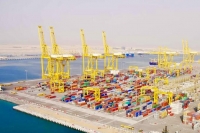
According to IRNA, quoted from Iran's Trade Promotion Organization, Abbas Abdolkhani, referring to the resumption of Iran-Qatar trade, stated: After approximately five months of halt in the maritime transport route for goods between Dayyer Port in Iran and Al Ruwais Port in Qatar, following continuous follow-ups by the Embassy of the Islamic Republic of Iran in Doha and coordination with relevant Qatari officials, Al Ruwais Port has once again begun accepting Iranian goods.
Referring to the importance of this trade route, he added: Al Ruwais Port is considered one of the most important gateways for Iranian goods entering the Qatari market, and the resumption of activity on this maritime route will play a significant role in facilitating trade, reducing transportation costs, increasing the speed of goods supply, and enhancing the volume of commercial exchanges between the two countries.
The Commercial Attaché of the Islamic Republic of Iran in Doha stated: A diverse range of Iranian goods is exported to the Qatari market through this route, the most important of which include various types of fresh fruits and vegetables, produce, dried fruits, foodstuffs, aquatic products, eggs and protein products, construction materials, stone, white cement, mineral products, handmade and machine-made carpets, and other goods needed by the Qatari market.
Post-war era: smart reconstruction, not a return to past: energy expert
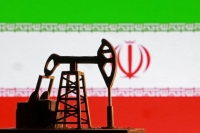
TEHRAN- An oil and gas expert stated: Wars do not only destroy infrastructure; they also transform the logic of investment. Any country emerging from a security crisis faces two choices. The first is merely compensating for past damages, and the second is building a more resilient, competitive, and attractive economy for investment from the heart of the crisis.
According to ISNA, the full text of the commentary by Samaneh Gheybi, an oil and gas expert, provided to ISNA, is as follows:
Iran, too, finds itself at such a point after the third imposed war. Now, the main question is not how much capital we need; the more important question is where and how to deploy the existing capital.
In the post-war environment, government financial resources are limited, the private sector makes decisions cautiously, foreign investors assess the country's risk with greater sensitivity, and global markets continue to face geopolitical fluctuations. Under such conditions, successful investment is no longer the product of intuitive decisions or temporary pressures; it is the result of data-driven governance and the scientific selection of projects.
Studies show that even in an industry like oil and gas—which is considered the main engine of Iran's economy—it is impossible to implement all projects, and choices must be made among them. This selection must be based on the analysis of various scenarios, the economic value of each project, and its resilience to uncertainty.
Over 140m tons of goods transported via roads in Q1
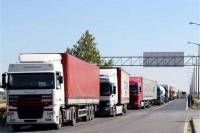
TEHRAN-The Director General of the Freight Transport Office of the Road Maintenance and Transport Organization reported the issuance of 9 million waybills and the transport of 140.4 million tons of various goods through the public transport fleet on the country's road network during the first three months of the current year.
According to Tuesday's report from IRNA, cited from the Road Maintenance and Transport Organization, Mehrdad Hamdollahi stated that during the aforementioned period, 49.1 million tons of construction and mineral goods, and 28.1 million tons of agricultural, livestock, and food products were transported across the roads.